Smart оборудование

Shredders
An industrial shredder is designed for fast and safe shredding of various types of materials, including plastic, wood, cardboard, rubber, scrap metal, textiles, and other production waste. The equipment ensures high performance, reduces waste volume, and optimizes storage, transportation, and further processing of materials.

SW-250/110125
The SW-250/110125 is designed to handle large streams of recyclable material, with a pressing force of 250 tonnes and a 110 kW motor. Its 2800 × 1050 mm feed opening and 1100 × 1250 mm bale cross-section distinguish it from smaller balers in the range. Bale formation and tying are automatic. The stated throughput range is 16–25 tonnes per hour for material with a bulk density of 30–60 kg/m³. Actual output depends on the material and feeding arrangements. Site planning must account for the equipment dimensions, the baler's weight of 35 tonnes and finished bale handling. We can prepare a proposal based on your material and operating requirements.
SW-200/2-110
They allow compressing secondary raw materials in automatic mode, i.e., the press starts when secondary raw materials are fed into the loading window, and then, as material arrives, the press forms a dense bale and ties it with wire. The operator ensures the supply of secondary raw materials and receives the finished bales.
ST-150/110125
They allow compressing secondary raw materials in automatic mode, i.e., the press starts when secondary raw materials are fed into the loading window, and then, as material arrives, the press forms a dense bale and ties it with wire. The operator ensures the supply of secondary raw materials and receives the finished bales.
SW-150/2-110
They allow compressing secondary raw materials in automatic mode, i.e., the press starts when secondary raw materials are fed into the loading window, and then, as material arrives, the press forms a dense bale and ties it with wire. The operator ensures the supply of secondary raw materials and receives the finished bales.
ST-125/2-110
They allow compressing secondary raw materials in automatic mode, i.e., the press starts when secondary raw materials are fed into the loading window, and then, as material arrives, the press forms a dense bale and ties it with wire. The operator ensures the supply of secondary raw materials and receives the finished bales.
ST-100/2-110
They allow compressing secondary raw materials in automatic mode, i.e., the press starts when secondary raw materials are fed into the loading window, and then, as material arrives, the press forms a dense bale and ties it with wire. The operator ensures the supply of secondary raw materials and receives the finished bales.

ST-60/180100/D
A vertical press is designed for compressing secondary raw materials and subsequently packaging them into a dense bale. Thanks to its compactness, the press can be installed in small spaces. The type of press is hydraulic. The press is equipped with a press plate located inside the press chamber, which moves in a vertical plane and compresses the material loaded into the press chamber. In the end, a dense bale is formed from the voluminous secondary raw material. The main idea of using press equipment is to reduce the volume of the material to be pressed in order to reduce transportation costs to the processing site.
SW-50/15076/D
A vertical press is designed for compressing secondary raw materials and subsequently packaging them into a dense bale. Thanks to its compactness, the press can be installed in small spaces. The type of press is hydraulic. The press is equipped with a press plate located inside the press chamber, which moves in a vertical plane and compresses the material loaded into the press chamber. In the end, a dense bale is formed from the voluminous secondary raw material. The main idea of using press equipment is to reduce the volume of the material to be pressed in order to reduce transportation costs to the processing site.
ST-40/12080/D
A vertical press is designed for compressing secondary raw materials and subsequently packaging them into a dense bale. Thanks to its compactness, the press can be installed in small spaces. The type of press is hydraulic. The press is equipped with a press plate located inside the press chamber, which moves in a vertical plane and compresses the material loaded into the press chamber. In the end, a dense bale is formed from the voluminous secondary raw material. The main idea of using press equipment is to reduce the volume of the material to be pressed in order to reduce transportation costs to the processing site.
SW-30/11070/D
A vertical press is designed for compressing secondary raw materials and subsequently packaging them into a dense bale. Thanks to its compactness, the press can be installed in small spaces. The type of press is hydraulic. The press is equipped with a press plate located inside the press chamber, which moves in a vertical plane and compresses the material loaded into the press chamber. In the end, a dense bale is formed from the voluminous secondary raw material. The main idea of using press equipment is to reduce the volume of the material to be pressed in order to reduce transportation costs to the processing site.
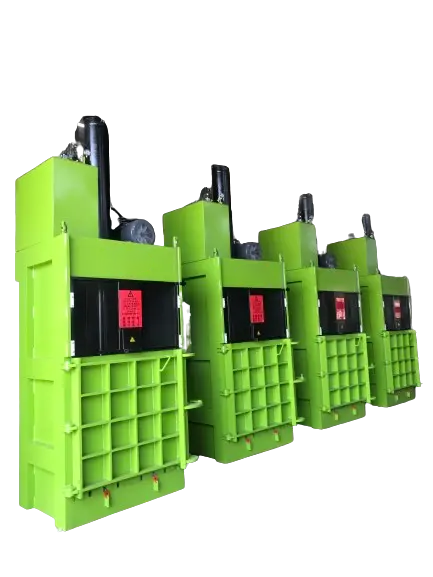
ST-80/12080
A vertical press is designed for compressing secondary raw materials and subsequently packaging them into a dense bale. Thanks to its compactness, the press can be installed in small spaces. The type of press is hydraulic. The press is equipped with a press plate located inside the press chamber, which moves in a vertical plane and compresses the material loaded into the press chamber. In the end, a dense bale is formed from the voluminous secondary raw material. The main idea of using press equipment is to reduce the volume of the material to be pressed in order to reduce transportation costs to the processing site.
ST-50/11070
A vertical press is designed for compressing secondary raw materials and subsequently packaging them into a dense bale. Thanks to its compactness, the press can be installed in small spaces. The type of press is hydraulic. The press is equipped with a press plate located inside the press chamber, which moves in a vertical plane and compresses the material loaded into the press chamber. In the end, a dense bale is formed from the voluminous secondary raw material. The main idea of using press equipment is to reduce the volume of the material to be pressed in order to reduce transportation costs to the processing site.
ST-40/10060
A vertical press is designed for compressing secondary raw materials and subsequently packaging them into a dense bale. Thanks to its compactness, the press can be installed in small spaces. The type of press is hydraulic. The press is equipped with a press plate located inside the press chamber, which moves in a vertical plane and compresses the material loaded into the press chamber. In the end, a dense bale is formed from the voluminous secondary raw material. The main idea of using press equipment is to reduce the volume of the material to be pressed in order to reduce transportation costs to the processing site.
ST-30/8060
A vertical press is designed for compressing secondary raw materials and subsequently packaging them into a dense bale. Thanks to its compactness, the press can be installed in small spaces. The type of press is hydraulic. The press is equipped with a press plate located inside the press chamber, which moves in a vertical plane and compresses the material loaded into the press chamber. In the end, a dense bale is formed from the voluminous secondary raw material. The main idea of using press equipment is to reduce the volume of the material to be pressed in order to reduce transportation costs to the processing site.
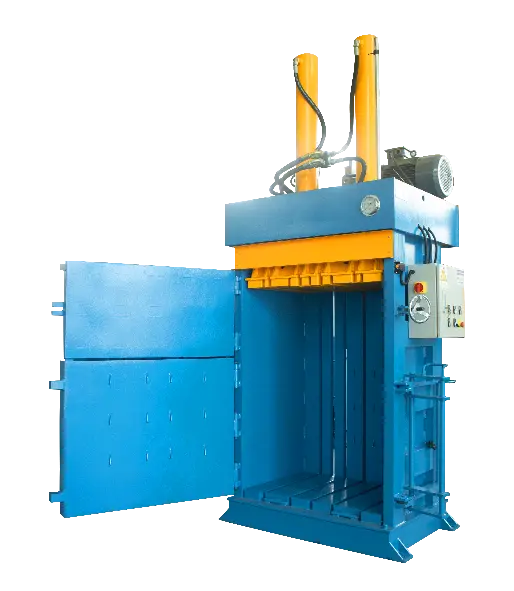
SW-50/15075
A vertical press is designed for compressing secondary raw materials and subsequently packaging them into a dense bale. Thanks to its compactness, the press can be installed in small spaces. The type of press is hydraulic. The press is equipped with a press plate located inside the press chamber, which moves in a vertical plane and compresses the material loaded into the press chamber. In the end, a dense bale is formed from the voluminous secondary raw material. The main idea of using press equipment is to reduce the volume of the material to be pressed in order to reduce transportation costs to the processing site.
SW-40/11075
A vertical press is designed for compressing secondary raw materials and subsequently packaging them into a dense bale. Thanks to its compactness, the press can be installed in small spaces. The type of press is hydraulic. The press is equipped with a press plate located inside the press chamber, which moves in a vertical plane and compresses the material loaded into the press chamber. In the end, a dense bale is formed from the voluminous secondary raw material. The main idea of using press equipment is to reduce the volume of the material to be pressed in order to reduce transportation costs to the processing site.
SW-30/11070
A vertical press is designed for compressing secondary raw materials and subsequently packaging them into a dense bale. Thanks to its compactness, the press can be installed in small spaces. The type of press is hydraulic. The press is equipped with a press plate located inside the press chamber, which moves in a vertical plane and compresses the material loaded into the press chamber. In the end, a dense bale is formed from the voluminous secondary raw material. The main idea of using press equipment is to reduce the volume of the material to be pressed in order to reduce transportation costs to the processing site.

ST-50/12080
A vertical press is designed for compressing secondary raw materials and subsequently packaging them into a dense bale. Thanks to its compactness, the press can be installed in small spaces. The type of press is hydraulic. The press is equipped with a press plate located inside the press chamber, which moves in a vertical plane and compresses the material loaded into the press chamber. In the end, a dense bale is formed from the voluminous secondary raw material. The main idea of using press equipment is to reduce the volume of the material to be pressed in order to reduce transportation costs to the processing site.
SW-30/12080
A vertical press is designed for compressing secondary raw materials and subsequently packaging them into a dense bale. Thanks to its compactness, the press can be installed in small spaces. The type of press is hydraulic. The press is equipped with a press plate located inside the press chamber, which moves in a vertical plane and compresses the material loaded into the press chamber. In the end, a dense bale is formed from the voluminous secondary raw material. The main idea of using press equipment is to reduce the volume of the material to be pressed in order to reduce transportation costs to the processing site.
SW-10/10070
A vertical press is designed for compressing secondary raw materials and subsequently packaging them into a dense bale. Thanks to its compactness, the press can be installed in small spaces. The type of press is hydraulic. The press is equipped with a press plate located inside the press chamber, which moves in a vertical plane and compresses the material loaded into the press chamber. In the end, a dense bale is formed from the voluminous secondary raw material. The main idea of using press equipment is to reduce the volume of the material to be pressed in order to reduce transportation costs to the processing site.
SW-5/8060
A vertical press is designed for compressing secondary raw materials and subsequently packaging them into a dense bale. Thanks to its compactness, the press can be installed in small spaces. The type of press is hydraulic. The press is equipped with a press plate located inside the press chamber, which moves in a vertical plane and compresses the material loaded into the press chamber. In the end, a dense bale is formed from the voluminous secondary raw material. The main idea of using press equipment is to reduce the volume of the material to be pressed in order to reduce transportation costs to the processing site.

SW-100/2-110
They allow compressing secondary raw materials in automatic mode, i.e., the press starts when secondary raw materials are fed into the loading window, and then, as material arrives, the press forms a dense bale and ties it with wire. The operator ensures the supply of secondary raw materials and receives the finished bales.
ST-100/11080
They allow compressing secondary raw materials in automatic mode, i.e., the press starts when secondary raw materials are fed into the loading window, and then, as material arrives, the press forms a dense bale and ties it with wire. The operator ensures the supply of secondary raw materials and receives the finished bales.
SW-80/11085
They allow compressing secondary raw materials in automatic mode, i.e., the press starts when secondary raw materials are fed into the loading window, and then, as material arrives, the press forms a dense bale and ties it with wire. The operator ensures the supply of secondary raw materials and receives the finished bales.
SW-80/11080
They allow compressing secondary raw materials in automatic mode, i.e., the press starts when secondary raw materials are fed into the loading window, and then, as material arrives, the press forms a dense bale and ties it with wire. The operator ensures the supply of secondary raw materials and receives the finished bales.
ST-60/11075
They allow compressing secondary raw materials in automatic mode, i.e., the press starts when secondary raw materials are fed into the loading window, and then, as material arrives, the press forms a dense bale and ties it with wire. The operator ensures the supply of secondary raw materials and receives the finished bales.

SW-60/11075
They allow compressing secondary raw materials in automatic mode, i.e., the press starts when secondary raw materials are fed into the loading window, and then, as material arrives, the press forms a dense bale and ties it with wire. The operator ensures the supply of secondary raw materials and receives the finished bales.
SW-60/7585
They allow compressing secondary raw materials in automatic mode, i.e., the press starts when secondary raw materials are fed into the loading window, and then, as material arrives, the press forms a dense bale and ties it with wire. The operator ensures the supply of secondary raw materials and receives the finished bales.
ST-40/7280
They allow compressing secondary raw materials in automatic mode, i.e., the press starts when secondary raw materials are fed into the loading window, and then, as material arrives, the press forms a dense bale and ties it with wire. The operator ensures the supply of secondary raw materials and receives the finished bales.
SW-30/5050
They allow compressing secondary raw materials in automatic mode, i.e., the press starts when secondary raw materials are fed into the loading window, and then, as material arrives, the press forms a dense bale and ties it with wire. The operator ensures the supply of secondary raw materials and receives the finished bales.
ST-20/5050
The ST-20/5050 is a compact automatic baler with a pressing force of 20 tonnes. It produces bales with a cross-section of 500 × 500 mm and a length of 300–1000 mm. The 625 × 480 mm feed opening must be considered when preparing material: individual pieces must be compatible with the selected feeding method. The baler automatically compacts incoming recyclable material and ties the finished bale with wire. The operator handles feeding and bale collection. The stated throughput is 1–1.5 tonnes per hour for material with a bulk density of 30–60 kg/m³. To assess its suitability for your site, provide the waste composition, volume per shift and dimensions of the installation area.

ST-20/8060
A vertical press is designed for compressing secondary raw materials and subsequently packaging them into a dense bale. Thanks to its compactness, the press can be installed in small spaces. The type of press is hydraulic. The press is equipped with a press plate located inside the press chamber, which moves in a vertical plane and compresses the material loaded into the press chamber. In the end, a dense bale is formed from the voluminous secondary raw material. The main idea of using press equipment is to reduce the volume of the material to be pressed in order to reduce transportation costs to the processing site.
ST-10/6040
A vertical press is designed for compressing secondary raw materials and subsequently packaging them into a dense bale. Thanks to its compactness, the press can be installed in small spaces. The type of press is hydraulic. The press is equipped with a press plate located inside the press chamber, which moves in a vertical plane and compresses the material loaded into the press chamber. In the end, a dense bale is formed from the voluminous secondary raw material. The main idea of using press equipment is to reduce the volume of the material to be pressed in order to reduce transportation costs to the processing site.
SW-8/7050
A vertical press is designed for compressing secondary raw materials and subsequently packaging them into a dense bale. Thanks to its compactness, the press can be installed in small spaces. The type of press is hydraulic. The press is equipped with a press plate located inside the press chamber, which moves in a vertical plane and compresses the material loaded into the press chamber. In the end, a dense bale is formed from the voluminous secondary raw material. The main idea of using press equipment is to reduce the volume of the material to be pressed in order to reduce transportation costs to the processing site.
ST-5/6040
A vertical press is designed for compressing secondary raw materials and subsequently packaging them into a dense bale. Thanks to its compactness, the press can be installed in small spaces. The type of press is hydraulic. The press is equipped with a press plate located inside the press chamber, which moves in a vertical plane and compresses the material loaded into the press chamber. In the end, a dense bale is formed from the voluminous secondary raw material. The main idea of using press equipment is to reduce the volume of the material to be pressed in order to reduce transportation costs to the processing site.
SW-2/5947
A vertical press is designed for compressing secondary raw materials and subsequently packaging them into a dense bale. Thanks to its compactness, the press can be installed in small spaces. The type of press is hydraulic. The press is equipped with a press plate located inside the press chamber, which moves in a vertical plane and compresses the material loaded into the press chamber. In the end, a dense bale is formed from the voluminous secondary raw material. The main idea of using press equipment is to reduce the volume of the material to be pressed in order to reduce transportation costs to the processing site.
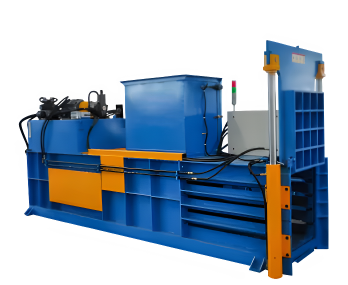
SW-150/110120/SGU
This group of presses is also suitable for pressing large volumes of secondary raw materials, but differs only in that the fact of forming a dense pile requires the operator to participate in the process of strapping it. They allow you to press secondary raw materials in automatic mode, i.e. the press turns on when the secondary raw materials enter the loading window, then, as the material arrives, the press forms a dense pile and ties it with wire. The operator provides the supply of secondary raw materials and the reception of finished bales
SW-120/110120/SGU
The SW-120/110120/SGU is a closed-chamber baler with an upward-sliding gate. It provides a pressing force of 120 tonnes and produces bales with a cross-section of 1100 × 1200 mm and a length of 300–1200 mm. This configuration allows bale length to be selected to suit subsequent handling and storage. Bale formation is automatic, while tying requires operator involvement. Five tying lines are provided. When selecting the equipment, consider not only the dimensions of the baler but also the space required for loading, servicing and bale collection. Tell us about your recyclable material and installation conditions so we can help clarify the configuration and price.
SW-100/2-110/SGU
This group of presses is also suitable for pressing large volumes of secondary raw materials, but differs only in that the fact of forming a dense pile requires the operator to participate in the process of strapping it. They allow you to press secondary raw materials in automatic mode, i.e. the press turns on when the secondary raw materials enter the loading window, then, as the material arrives, the press forms a dense pile and ties it with wire. The operator provides the supply of secondary raw materials and the reception of finished bales
SW-80/11080/SGU
This group of presses is also suitable for pressing large volumes of secondary raw materials, but differs only in that the fact of forming a dense pile requires the operator to participate in the process of strapping it. They allow you to press secondary raw materials in automatic mode, i.e. the press turns on when the secondary raw materials enter the loading window, then, as the material arrives, the press forms a dense pile and ties it with wire. The operator provides the supply of secondary raw materials and the reception of finished bales
SW-60/7585/SGU
This group of presses is also suitable for pressing large volumes of secondary raw materials, but differs only in that the fact of forming a dense pile requires the operator to participate in the process of strapping it. They allow you to press secondary raw materials in automatic mode, i.e. the press turns on when the secondary raw materials enter the loading window, then, as the material arrives, the press forms a dense pile and ties it with wire. The operator provides the supply of secondary raw materials and the reception of finished bales
SW-40/7272/SGU
This group of presses is also suitable for pressing large volumes of secondary raw materials, but differs only in that the fact of forming a dense pile requires the operator to participate in the process of strapping it. They allow you to press secondary raw materials in automatic mode, i.e. the press turns on when the secondary raw materials enter the loading window, then, as the material arrives, the press forms a dense pile and ties it with wire. The operator provides the supply of secondary raw materials and the reception of finished bales
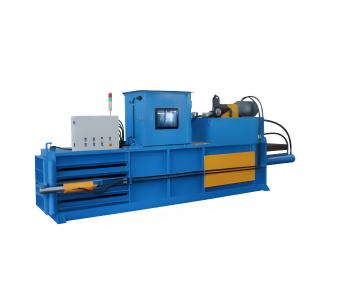
SW-120/110120/SG
This group of presses is also suitable for pressing large volumes of secondary raw materials, but differs only in that the fact of forming a dense pile requires the operator to participate in the process of strapping it. They allow you to press secondary raw materials in automatic mode, i.e. the press turns on when the secondary raw materials enter the loading window, then, as the material arrives, the press forms a dense pile and ties it with wire. The operator provides the supply of secondary raw materials and the reception of finished bales
ST-100/11085/SG
This group of presses is also suitable for pressing large volumes of secondary raw materials, but differs only in that the fact of forming a dense pile requires the operator to participate in the process of strapping it. They allow you to press secondary raw materials in automatic mode, i.e. the press turns on when the secondary raw materials enter the loading window, then, as the material arrives, the press forms a dense pile and ties it with wire. The operator provides the supply of secondary raw materials and the reception of finished bales
SW-80/11080/SG
This group of presses is also suitable for pressing large volumes of secondary raw materials, but differs only in that the fact of forming a dense pile requires the operator to participate in the process of strapping it. They allow you to press secondary raw materials in automatic mode, i.e. the press turns on when the secondary raw materials enter the loading window, then, as the material arrives, the press forms a dense pile and ties it with wire. The operator provides the supply of secondary raw materials and the reception of finished bales
ST-60/10080/SG
This group of presses is also suitable for pressing large volumes of secondary raw materials, but differs only in that the fact of forming a dense pile requires the operator to participate in the process of strapping it. They allow you to press secondary raw materials in automatic mode, i.e. the press turns on when the secondary raw materials enter the loading window, then, as the material arrives, the press forms a dense pile and ties it with wire. The operator provides the supply of secondary raw materials and the reception of finished bales
SW-40/7272/SG
This group of presses is also suitable for pressing large volumes of secondary raw materials, but differs only in that the fact of forming a dense pile requires the operator to participate in the process of strapping it. They allow you to press secondary raw materials in automatic mode, i.e. the press turns on when the secondary raw materials enter the loading window, then, as the material arrives, the press forms a dense pile and ties it with wire. The operator provides the supply of secondary raw materials and the reception of finished bales
ST-30/7070/SG
This group of presses is also suitable for pressing large volumes of secondary raw materials, but differs only in that the fact of forming a dense pile requires the operator to participate in the process of strapping it. They allow you to press secondary raw materials in automatic mode, i.e. the press turns on when the secondary raw materials enter the loading window, then, as the material arrives, the press forms a dense pile and ties it with wire. The operator provides the supply of secondary raw materials and the reception of finished bales

SW-150/110120/S
This group of presses is also suitable for pressing large volumes of secondary raw materials, but differs only in that the fact of forming a dense pile requires the operator to participate in the process of strapping it. They allow you to press secondary raw materials in automatic mode, i.e. the press turns on when the secondary raw materials enter the loading window, then, as the material arrives, the press forms a dense pile and ties it with wire. The operator provides the supply of secondary raw materials and the reception of finished bales
SW-120/110120/S
This group of presses is also suitable for pressing large volumes of secondary raw materials, but differs only in that the fact of forming a dense pile requires the operator to participate in the process of strapping it. They allow you to press secondary raw materials in automatic mode, i.e. the press turns on when the secondary raw materials enter the loading window, then, as the material arrives, the press forms a dense pile and ties it with wire. The operator provides the supply of secondary raw materials and the reception of finished bales
SW-100/110110/S
This group of presses is also suitable for pressing large volumes of secondary raw materials, but differs only in that the fact of forming a dense pile requires the operator to participate in the process of strapping it. They allow you to press secondary raw materials in automatic mode, i.e. the press turns on when the secondary raw materials enter the loading window, then, as the material arrives, the press forms a dense pile and ties it with wire. The operator provides the supply of secondary raw materials and the reception of finished bales
SW-80/11080/S
This group of presses is also suitable for pressing large volumes of secondary raw materials, but differs only in that the fact of forming a dense pile requires the operator to participate in the process of strapping it. They allow you to press secondary raw materials in automatic mode, i.e. the press turns on when the secondary raw materials enter the loading window, then, as the material arrives, the press forms a dense pile and ties it with wire. The operator provides the supply of secondary raw materials and the reception of finished bales
SW-60/7585/S
This group of presses is also suitable for pressing large volumes of secondary raw materials, but differs only in that the fact of forming a dense pile requires the operator to participate in the process of strapping it. They allow you to press secondary raw materials in automatic mode, i.e. the press turns on when the secondary raw materials enter the loading window, then, as the material arrives, the press forms a dense pile and ties it with wire. The operator provides the supply of secondary raw materials and the reception of finished bales
ST-40/7280/S
This group of presses is also suitable for pressing large volumes of secondary raw materials, but differs only in that the fact of forming a dense pile requires the operator to participate in the process of strapping it. They allow you to press secondary raw materials in automatic mode, i.e. the press turns on when the secondary raw materials enter the loading window, then, as the material arrives, the press forms a dense pile and ties it with wire. The operator provides the supply of secondary raw materials and the reception of finished bales
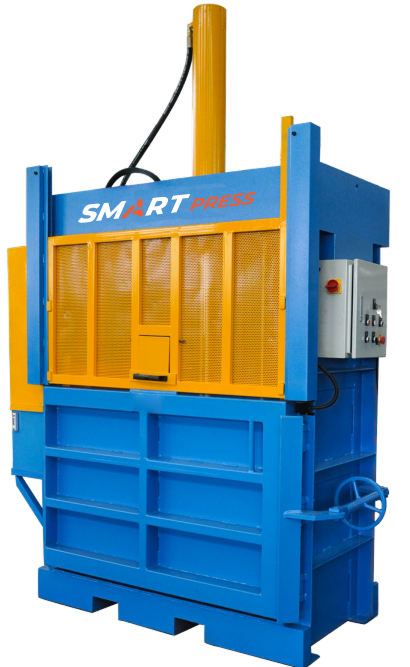
Vertical presses
The vertical press is designed for pressing secondary raw materials and then packing them into a dense bale (bale). Due to its compactness, the press can be installed in small rooms. The type of press is hydraulic. The press is equipped with a press plate located inside the press chamber, which moves in a vertical plane and compresses the material loaded into the press chamber. Eventually, a dense pile is formed from the bulk secondary raw materials. The main idea of using pressing equipment is to reduce the volume of pressed material in order to reduce the cost of transporting it to the processing site.

BIO compactors
Smart press C-Bio mobile compactors are designed for the treatment of waste with a high moisture content, such as wet mixed waste and food waste. The compactors are completely sealed to ensure hygiene at the location. They are equipped with a low-lying loading window, which makes it easier to load waste. The Smart press CBio biocompactor uses the technology of a self-cleaning pendulum press plate. The pendulum press plate works like a wiper: any material that does not fall into the range of the press plate is removed in the reverse direction of the press plate. Due to this design, there is no need to regularly clean the cavities behind the press plate.

Mobile compactors
Smartpress C-Max compactors are universal waste compactors designed for active operation. They are easy to use and designed to meet various waste management requirements. Compactors are a highly efficient alternative to waste containers, having a compression ratio of up to 10:1.

Stationary compactors
The reliable stationary compactors for Smartpress D-Max waste are designed for intensive operation. It is an ideal solution for processing a large number of different dry materials. The large loading window of the compactor ensures easy loading of waste. Since D-Max are stationary compactors, their containers are disconnected for transportation, and the pressing unit remains securely attached to the concrete platform. Compactors can be equipped with receiving hoppers for various waste loading options: through a wall, from ground level, ramp or from the level of 2-3 floors. The design of the compactor also allows the installation of various loading devices, such as conveyors. The D-Max series compactors can be supplied with a number of additional options, for example, with a dumpster tipper and a lid opening system. Containers of several standard volumes up to 32 m2 can be used with compactors to handle extremely heavy loads. Compactors can operate 24/7, especially if there is a second spare container.
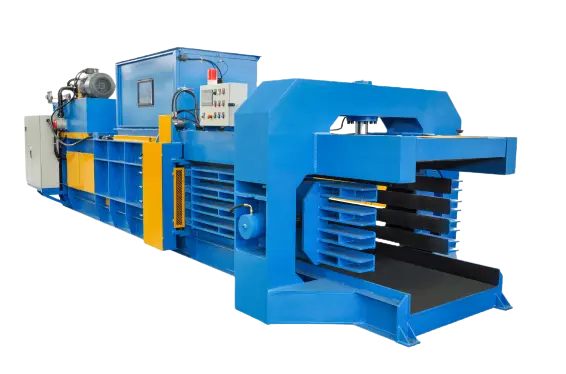
Horizontal presses
They allow you to press secondary raw materials in automatic mode, i.e. the press turns on when the secondary raw materials enter the loading window, then, as the material arrives, the press forms a dense pile and ties it with wire. The operator provides the supply of secondary raw materials and the reception of finished bales
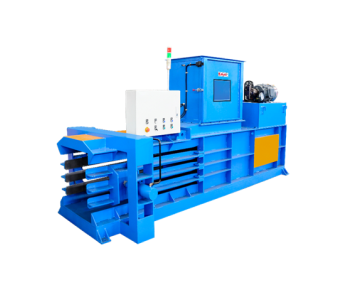
Semi-automatic horizontal presses
This group of presses is also suitable for pressing large volumes of secondary raw materials, but differs only in that the fact of forming a dense pile requires the operator to participate in the process of strapping it. This group of presses is also suitable for pressing large volumes of secondary raw materials, but differs only in that the fact of forming a dense pile requires the operator to participate in the process of strapping it. They allow you to press secondary raw materials in automatic mode, i.e. the press is switched on at the moment of receipt of secondary raw materials into the loading window, then, as the material arrives, the press forms a dense pile and ties it with wire. The operator provides the supply of secondary raw materials and the reception of finished bales
FEEDBACK
Fill out the form below, and we will call you back shortly. We are always happy to help!